
Two Types of Sounds
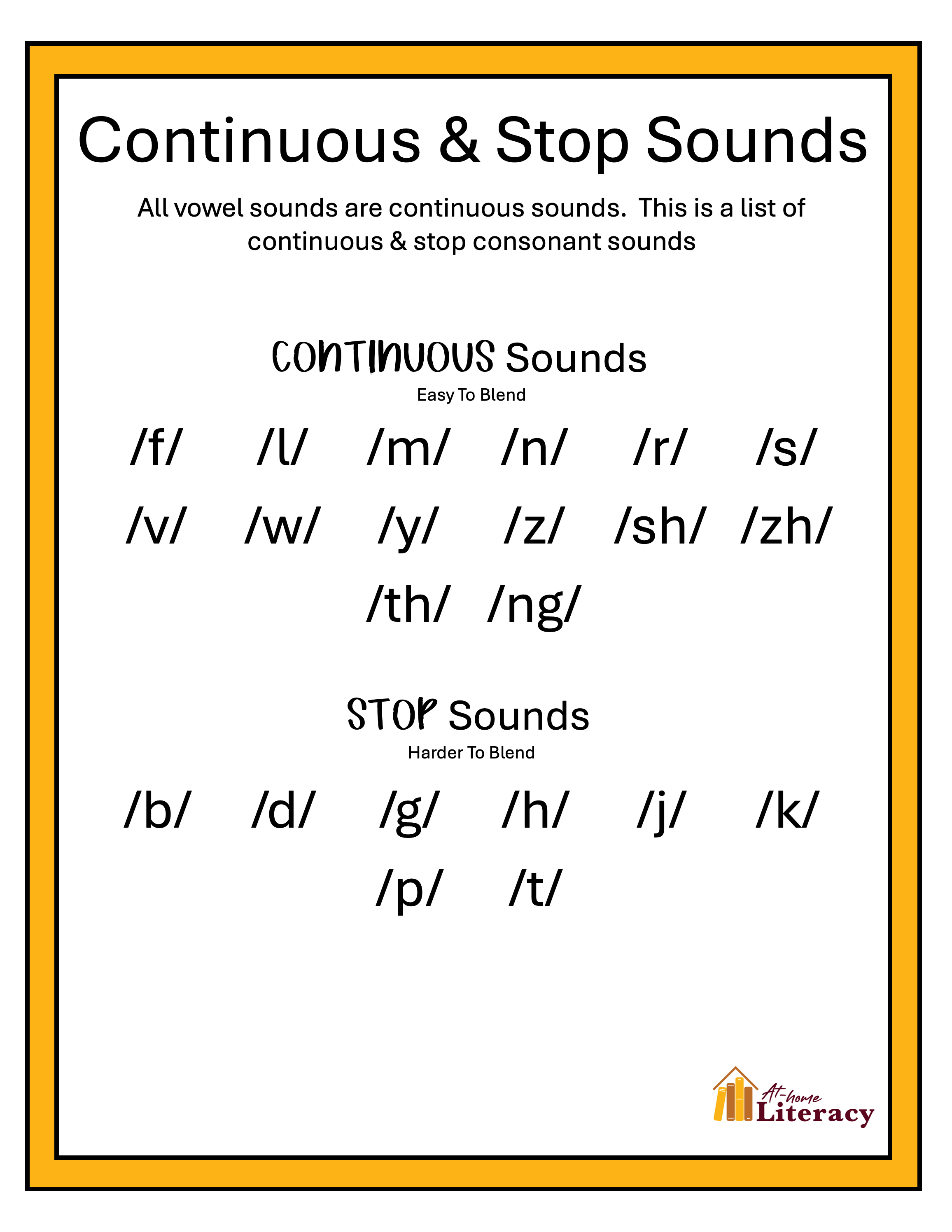
Understanding the difference between continuous and stop sounds can really come in handy when you're working with children. Children tend to find it easier to engage with words that feature continuous sounds at the beginning. Here is a helpful handout that highlights which sounds fall into each category so you can choose the best words for the children you're teaching.
Voiced & Unvoiced Pairs
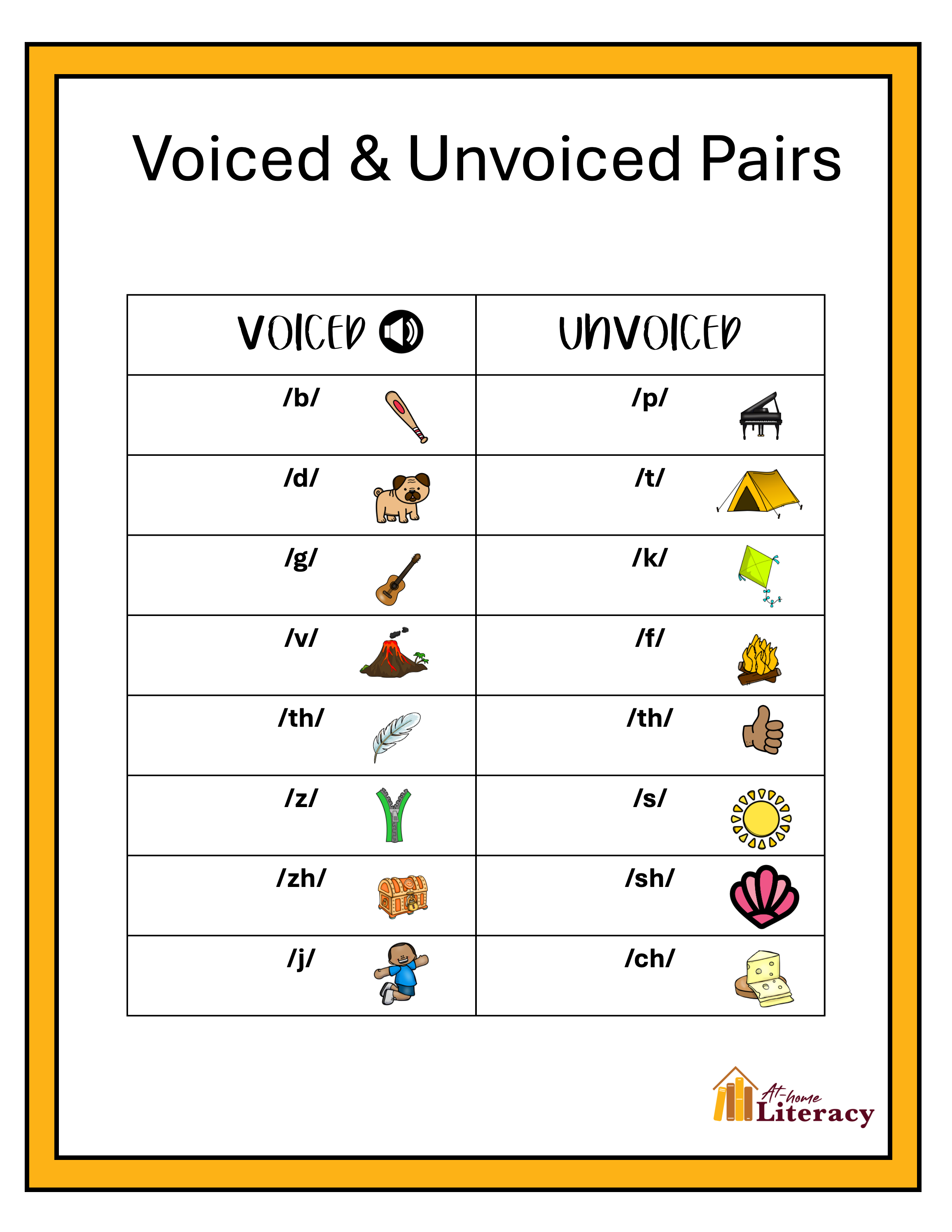
Children sometimes mix up these sound pairs because they are very similar to produce. For instance, a child might mistakenly write “mad” as “mat” or “gate” as “Kate”. If you notice a child using the incorrect letter in any of these pairs, point out the distinction between the voiced and unvoiced sounds, and encourage them to attempt their spelling again.
Teaching Consonant Sounds
When working with sounds, try using a mirror to help children see what their mouth is doing when they are producing the sound. Draw attention to what the lips, teeth, and tongue are doing. Also help the students determine if the sound is voiced or unvoiced.
