
Wherever We Go, There’s an ABC to Learn
When I first started teaching my son the alphabet, I pulled out my old collection of worksheets from my teaching days and thought we’d do a page a day. But pretty quickly, I realized that wasn’t going to work with my very lively, very strong-willed three-year-old. Luckily, homeschooling gave me the flexibility to ditch the worksheets and switch things up based on what he needed. Before long, learning the ABCs went from a stressful power struggle to a fun and enjoyable experience for both of us. Keep reading to discover my top tips for teaching the ABCs with minimal planning and less fuss!
#1 Shift from Creating Engagement to Redirecting It
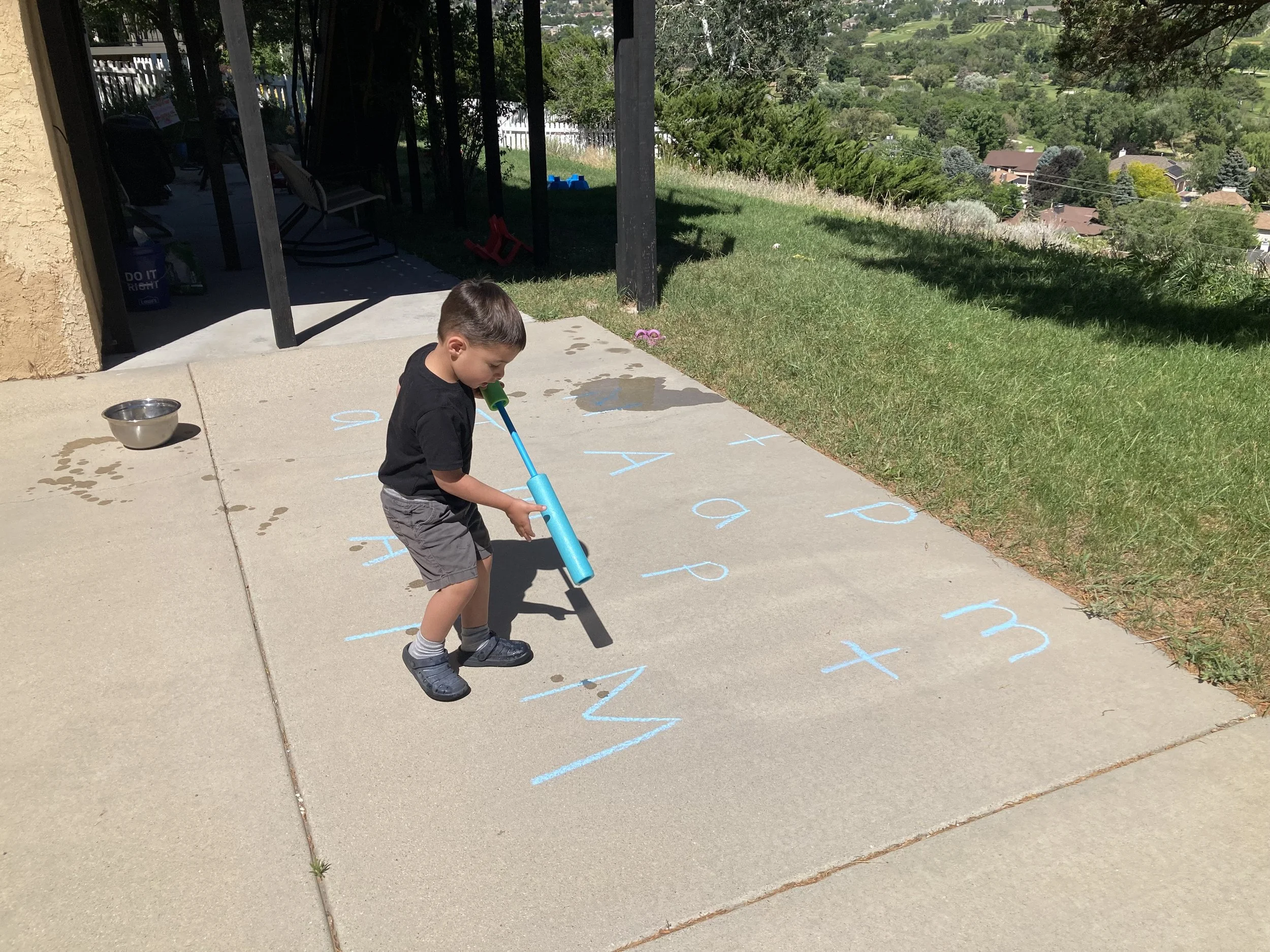
I used to think I needed to create an engaging activity for my child to learn, but now I simply follow the engagement that's already happening and add my lesson seamlessly. For example, one day my child was having fun outside with his squirt gun. Instead of trying to force him into a “learning” activity, I took advantage of what he was already engaged in and drew some letters with chalk on the ground. Then I asked him to spray the letter that made the “mmmmm” sound, and so on. Shifting from creating engagement to redirecting it has been a game changer for the amount of planning I have to put into our homeschooling. Focusing on finding learning opportunities rather than creating them keeps the energy light and fun.
#2 Be Prepared But Keep It Simple
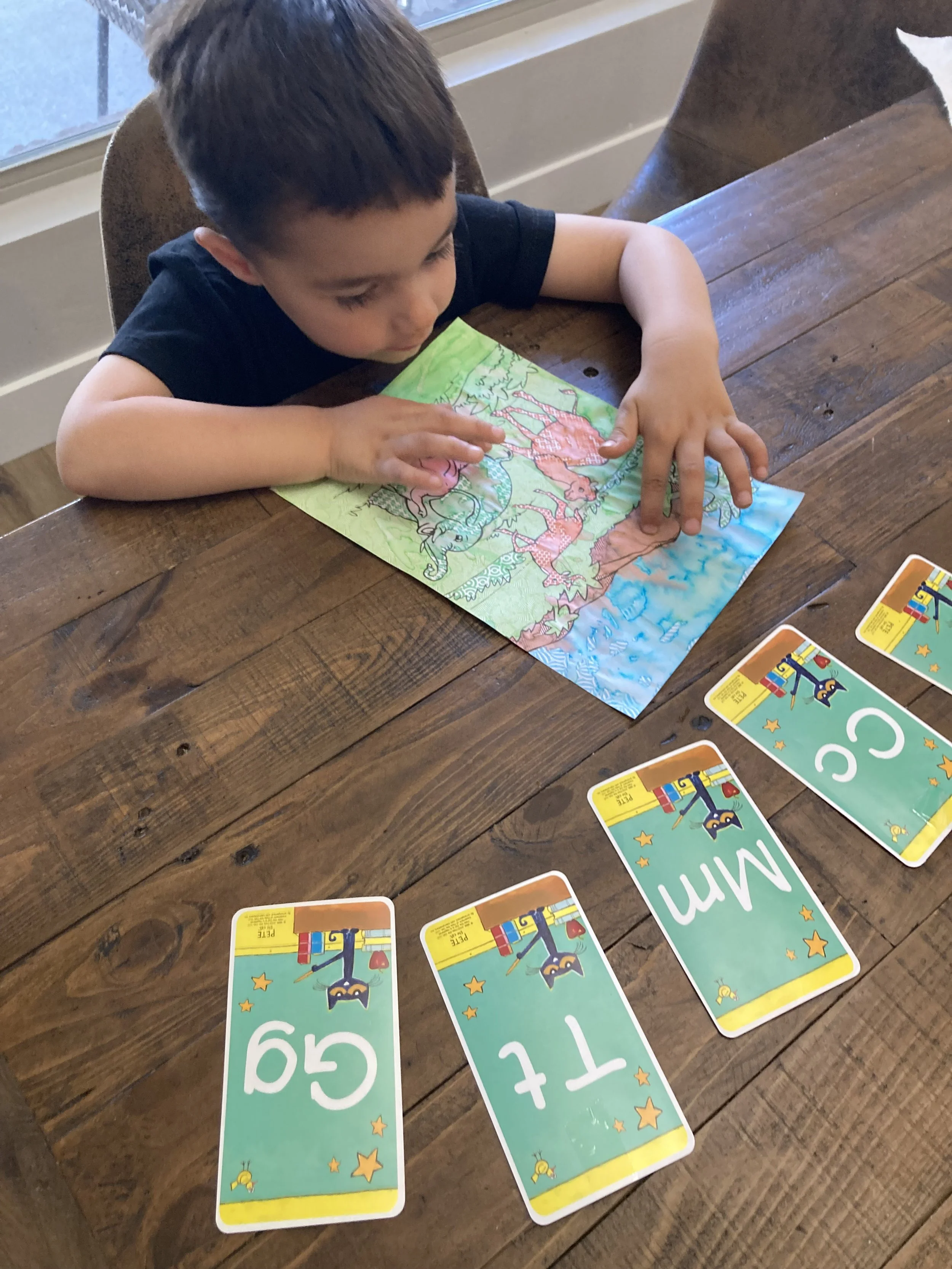
If we’re going to shift from creating engagement to redirecting it, then we should be prepared to take advantage of learning opportunities as they come. It doesn’t require much. I usually keep a stack of ABC flashcards nearby and a marker or maybe some chalk if we’re outside. I use flashcards as a helpful tool when I ask my child, “What letter spells the ____ sound?” If he’s having trouble naming the right letter, I’ll show him a few flashcards to choose from. That way, we narrow down the options from 26 letters to just the 5 he’s seeing. Below is an example of how I used my tools to gently redirect his engagement from painting to learning his ABCs.
Me: “Oh I see you’re painting a picture. What is this?”
My son: “That’s a mountain.”
Me: “Mountain. MMMMountain. What sound does mountain start with?”
My son: “Mmmmmm”
Me: “That’s right. And what letter spells the mmmm sound?”
My son: “M”
Me: “That’s right. Let’s add that letter to your painting.”
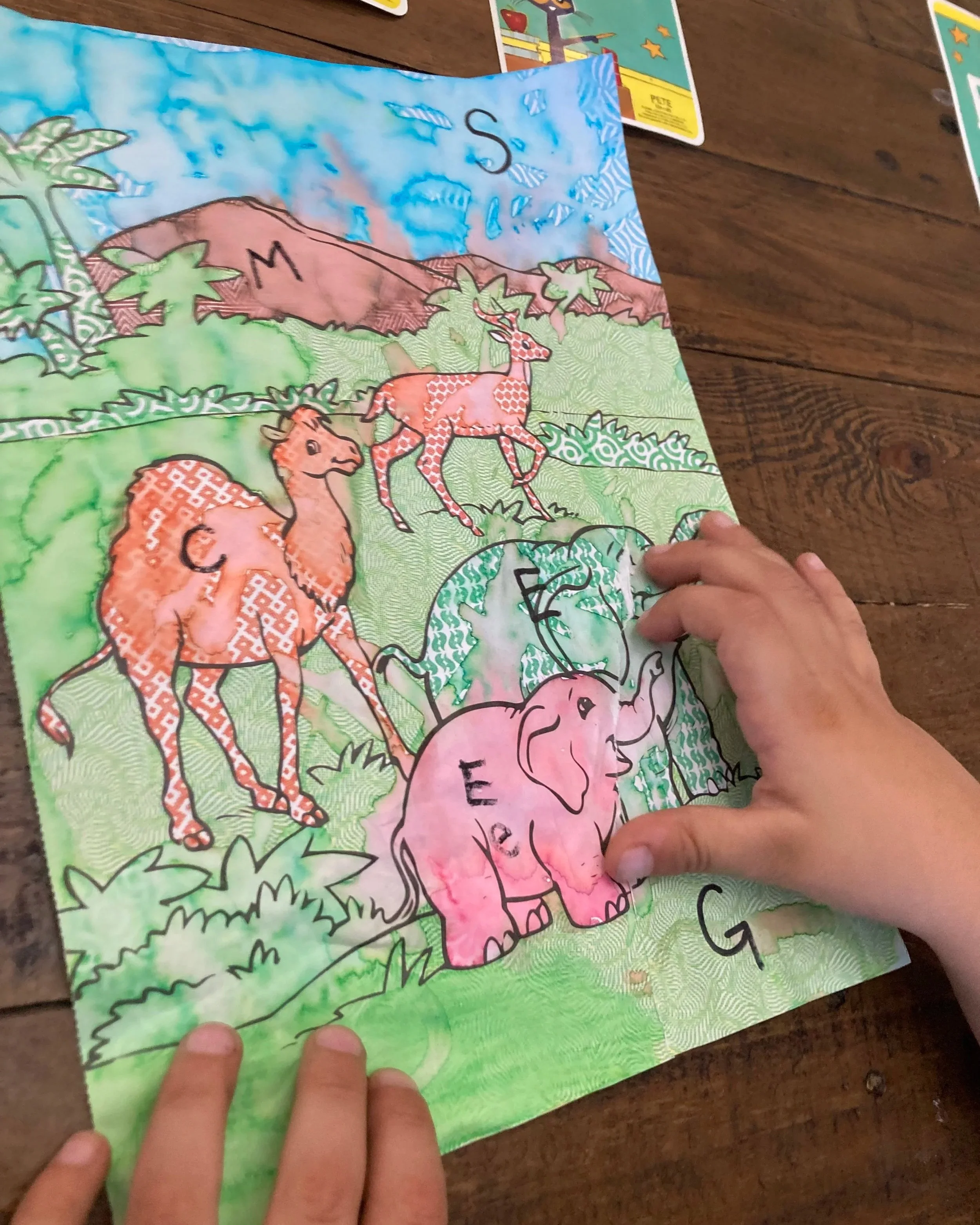
We then used a marker to label the first letter of several objects in the picture: mountain, camel, grass, sky, elephant and tree.
#3 Always Connect the Sound to the Symbol
When teaching the alphabet, it’s really helpful to focus on connecting sounds with symbols. This actually happens in two key steps. First, the child needs to recognize and hear the individual sounds in words. We call this phonological awareness or sound awareness. When a child isn’t fully developed in this area, they might run into spelling challenges later because they tend to spell words the way they hear them. That’s why I’ve seen kids spell “tree” as “chree.” When I’m teaching my son the alphabet, I always start by asking these two questions, in this order:
What is the first sound you here in the word _____?
Which letter spells the _____ sound?
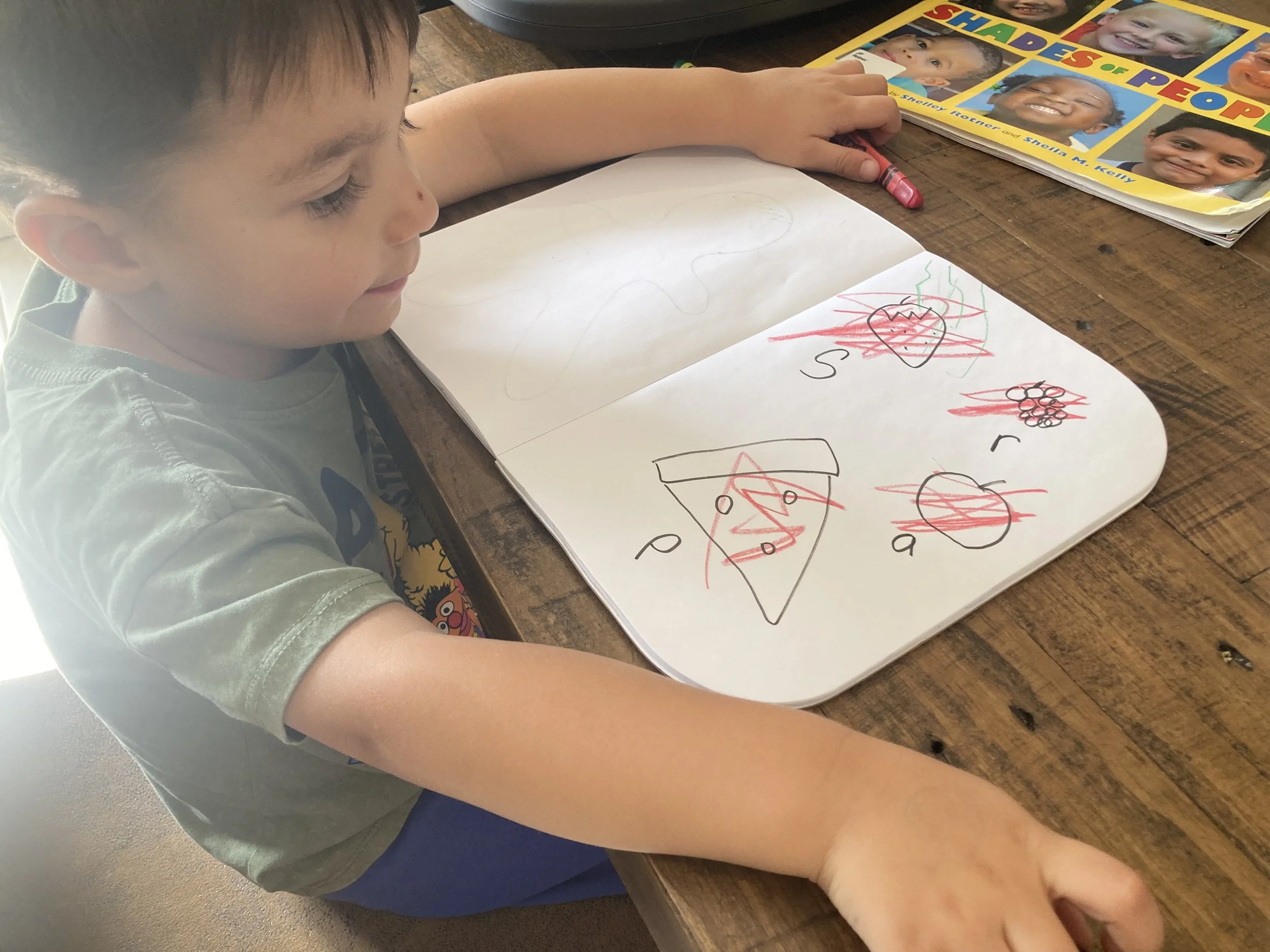
Here's an example of how I helped my son connect sounds to symbols. He had asked me to draw different objects he wanted to color so I added my two questions to each picture and labeled the first letter of each object. So easy and so effective!
Teaching the ABCs doesn’t need to be a complicated, heavily planned lesson. Simply notice when your child shows interest and turn those moments into fun learning opportunities. This approach keeps homeschooling relaxed and keeps your child happy and engaged.